How Many Hours of Sleep Is Enough for a Student? Complete Guide
Are you a student pulling all-nighters before exams, or a parent worried about your child’s endless screen time and early school bells? If so, you’re not alone. Many students today struggle to balance studies, extracurriculars, and rest. But here’s the truth: sleep for students isn’t a luxury—it’s the secret weapon for better grades, sharper minds, and happier days.
Getting enough sleep helps your brain process what you learned during the day, boosts focus during classes, and keeps your body strong against stress and illness. Without it, even the smartest student can feel foggy, irritable, and overwhelmed. In this complete guide, we’ll explore why sleep matters so much, exactly how many hours of sleep is enough for a student at different ages, the downsides of skimping on rest, and practical tips to build a healthy student sleep schedule.
Whether you’re in school, high school, or college, proper sleep for students can transform your academic performance and overall well-being. Let’s dive in and discover how a few extra hours in bed can lead to bigger successes in life.
Why Sleep Is Important for Students
Sleep isn’t just “downtime“—it’s when your body and brain do their most important work. For students juggling homework, tests, and social life, quality sleep for students makes all the difference.
Brain Development and Memory
During deep sleep, your brain consolidates memories. What you studied in class gets stored properly, helping you recall facts faster during exams. Without enough rest, new information slips away like sand through your fingers.
Concentration and Focus
A well-rested student stays alert in lectures and solves problems quicker. Sleep sharpens attention, so you absorb lessons better instead of zoning out halfway through.
Emotional Balance
Teens and young adults often face mood swings from hormones and pressure. Good sleep regulates emotions, reducing crankiness and helping you handle stress like a champ.
Physical Health
Sleeps repairs muscles, strengthens your immune system, and keeps hormones in check. Students who sleep well get sick less often and have more energy for sports or gym class.
Academic Performance Improvement
Research shows students with healthy sleep habits earn higher grades. They learn faster, think creatively, and perform better on tests. In short, sleep for students turns hard work into real results.
Making sleep a priority isn’t lazy—it’s smart strategy for every student aiming high.
How Many Hours of Sleep Is Enough for a Student?
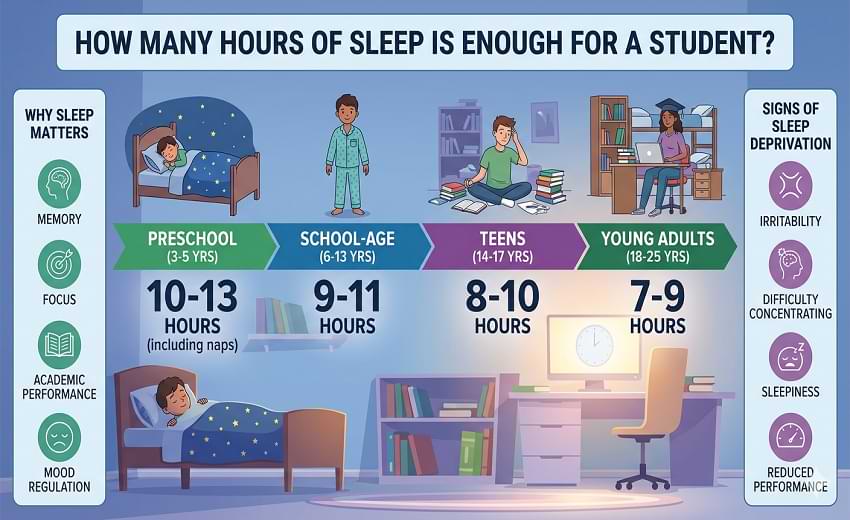
The magic number for sleep hours for students changes as you grow. Experts from the American Academy of Sleep Medicine (AASM) and CDC have clear guidelines based on age. Here’s the breakdown tailored for students.
Sleep Hours for School Students (6–12 years)
School kids aged 6 to 12 need 9–12 hours of sleep per night. This is the sweet spot for growing bodies and busy brains.
With packed school days, homework, and playtime, hitting this range helps them stay energetic and focused. Proper sleep at this age supports steady growth, better behavior in class, and stronger learning skills. Parents, imagine your child acing math tests because their brain had time to recharge overnight!
Sleep Hours for Teen Students (13–18 years)
Teen students (13–18 years) should aim for 8–10 hours nightly. This stage brings huge changes—puberty, heavier coursework, and social demands.
Adequate sleep fuels brain growth, improves learning, and balances moods during stressful exam seasons. It also supports physical development, like height and muscle strength. Teens who get enough rest handle early morning classes better and avoid that dreaded afternoon slump.
Sleep Hours for College Students (18–25 years)
College students and young adults (18–25) thrive on 7–9 hours of sleep. Late-night study sessions and part-time jobs often cut into rest, but sticking close to this range boosts productivity and mental health.
At this age, sleep enhances memory for complex subjects, sharpens decision-making for projects, and fights off burnout. Consistent rest helps college students stay motivated, creative, and resilient against the pressures of independence.
Remember, these are averages—listen to your body. If you wake up refreshed after 8 hours, that’s your ideal!
Effects of Lack of Sleep on Students
Skipping sleep might seem like a quick fix for deadlines, but the costs add up fast. Lack of sleep for students leads to a domino effect of problems:
- Poor concentration: You stare at textbooks but can’t absorb a thing. Focus drops, and simple tasks feel impossible.
- Memory problems: Facts you crammed the night before vanish during tests. Sleep helps “lock in” learning—without it, retention suffers.
- Stress and anxiety: Tired students feel more overwhelmed. Small worries snowball into big anxiety, affecting mental health.
- Low academic performance: Studies link sleep deprivation to lower GPAs. Students pulling all-nighters often score worse than well-rested peers.
- Weak immunity: Frequent colds or flu hit harder. Your body can’t fight germs effectively when exhausted.
- Daytime fatigue: That groggy feeling leads to irritability, slower reactions, and even risky driving for older teens.
Over time, chronic short sleep can harm long-term health and motivation. Don’t let it steal your potential!
Benefits of Getting Enough Sleep for Students
On the flip side, prioritizing sleep for students unlocks amazing perks:
- Better memory and learning: Sleep solidifies what you study, making exam prep more effective.
- Improved focus: Stay sharp in class and finish assignments faster with laser-like attention.
- Strong immune system: Fewer sick days mean more consistent school attendance and energy.
- Better mood: Wake up happier and handle friend drama or tough days with ease.
- Higher energy levels: Tackle sports, clubs, and studies without crashing mid-afternoon.
- Improved academic performance: Higher grades, better test scores, and smarter problem-solving become your new normal.
Students who sleep well report feeling more confident and in control. It’s like giving your future self a daily upgrade!
Best Sleep Schedule for Students
A solid student sleep schedule isn’t rocket science—it’s about consistency. Start with an early bedtime routine that fits your school or college timetable.
Go to bed and wake up at the same times every day, even on weekends. This trains your body clock for reliable energy. For example, if school starts at 8 AM, aim for bed by 10 PM (for teens) to get those 8–10 hours.
Avoid late-night screen use, as blue light tricks your brain into thinking it’s daytime. Balance study and sleep time by planning homework earlier in the evening. A fixed schedule reduces procrastination and morning panic.
Tips to Improve Sleep Quality for Students
Ready to upgrade your rest? Try these simple tips for better sleep for students:
- Maintain a sleep routine: Stick to the same bedtime and wake-up time daily.
- Avoid mobile and laptops before bed: Put devices away at least 30–60 minutes before sleep to let melatonin work its magic.
- Use a comfortable mattress and pillow: Invest in bedding that supports your body for deeper rest.
- Reduce caffeine intake: Skip energy drinks or coffee after 3 PM—opt for herbal tea instead.
- Practice relaxation or meditation: Try deep breathing or a quick journal session to unwind.
- Keep room quiet and dark: Use curtains, earplugs, or a white-noise app for a peaceful environment.
Small changes like these can dramatically improve sleep quality and daily performance.
Ideal Bedtime Routine for Students
Build an ideal bedtime routine to signal your body it’s time to rest. Start with a light dinner 2–3 hours before bed—no heavy or spicy foods that cause discomfort.
Then, spend 20 minutes planning the next day’s study goals so your mind isn’t racing. Follow with relaxation time: read a book, stretch gently, or listen to calm music. Create a proper sleep environment—cool, dark room with no clutter.
Finally, commit to your consistent sleep schedule. Over a week, this routine becomes a habit that makes falling asleep effortless.
Conclusion
So, how many hours of sleep is enough for a student? School kids need 9–12 hours, teens 8–10, and college students 7–9. These numbers aren’t arbitrary—they’re backed by science and make a huge difference in how you learn, feel, and succeed.
Sleep for students powers memory, focus, mood, and health. It turns good students into great ones by supporting academic performance and reducing stress. Poor sleep, on the other hand, steals your edge.
The good news? You control your student sleep schedule. Start small: pick a bedtime tonight and stick with one or two tips from this guide. Your brain, body, and report card will thank you. Prioritize sleep for students today for brighter tomorrows. Sweet dreams and stronger grades await!
Frequently Asked Questions
It depends on age, but generally 7–12 hours. School students (6–12) need 9–12 hours, teens (13–18) need 8–10, and college students need 7–9 for optimal sleep for students and peak performance.
No, 6 hours is usually too little. It leads to poor concentration, memory issues, and lower grades. Most students need more to stay healthy and sharp—aim higher for better results.
College students typically need 7–9 hours nightly. This supports productivity, mental health, and learning during demanding semesters. Consistent rest helps avoid burnout.
Lack of sleep causes fatigue, weak focus, mood swings, weaker immunity, and declining grades. Over time, it raises stress and health risks—prioritize sleep for students to avoid these effects.
The best sleep time aligns with your schedule, like 10 PM–7 AM for school or college. Consistency matters most. Build a relaxing bedtime routine and avoid screens to improve your student sleep schedule.
-
How Many Hours of Sleep Is Enough for a Student? Complete Guide
Are you a student pulling all-nighters before exams, or a parent worried about your child’s endless screen time and early school bells? If so, you’re …
-
What are the 10 Asanas of Yoga? Benefits, Steps & Beginner Guide
Are you looking for simple ways to feel more energetic, sleep better at night, and reduce daily stress? The 10 asanas of yoga might be …
-
Sleeping Positions: Types, Benefits, & Best Positions
Sleep is not just about how long you rest—it’s also about how you rest. The way your body is positioned during sleep can influence everything …
-
ह्यूमिडिफायर कैसे काम करता है?
क्या आप जानते हैं कि आपके घर के वातावरण में नमी का स्तर कितना महत्वपूर्ण है? जब हवा बहुत सूखी होती है, तो यह आपकी …
-
How Long Should You Keep a Memory Foam Pillow?
Memory foam pillows have gained appeal over the years owing to their aptitude for contouring to assume the shape of one’s head and neck for …