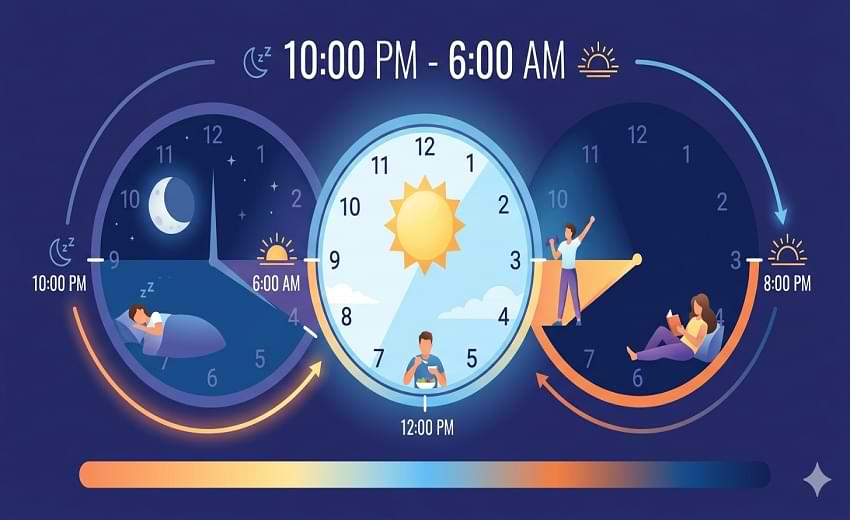
The Best Guide to Healthy Sleep Habits: Best Time to Sleep & Wake Up
Getting quality sleep is not a luxury—it’s a necessity. In today’s fast-paced lifestyle, most people ignore their sleep routine, leading to fatigue, stress, and long-term health issues. Developing healthy sleep habits can transform your physical health, mental clarity, and overall productivity.
In this complete guide, you’ll learn the best time to sleep and wake up, how your body clock works, and practical tips to improve your sleep quality naturally.
What Are Healthy Sleep Habits?
Healthy sleep habits, also known as sleep hygiene, are routines and practices that help you get consistent, uninterrupted, and restful sleep.
These habits ensure that your body follows a natural rhythm, allowing you to wake up refreshed and energized.
Why Is Sleep Important?
Sleep plays a crucial role in:
- Restoring energy levels
- Improving memory and focus
- Boosting immunity
- Regulating mood and stress
Effects of Poor Sleep
Lack of proper sleep can lead to:
- Increased stress and anxiety
- Reduced concentration
- Weight gain
- Higher risk of chronic diseases
How Many Hours of Sleep Do You Need?
The best time to sleep & wake up depends on your age and lifestyle.
| Age Group | Recommended Sleep |
| Children (6–12 years) | 9–12 hours |
| Teenagers | 8–10 hours |
| Adults | 7–9 hours |
| Older Adults | 7–8 hours |
For most adults, 7–8 hours of quality sleep is ideal for optimal health.
What Is Circadian Rhythm?
Your body follows a natural internal clock called the circadian rhythm, which regulates your sleep-wake cycle over a 24-hour period.
How It Works
- Your body releases melatonin (sleep hormone) at night
- Exposure to light reduces melatonin production
- Darkness signals your body to sleep
Best Time According to Body Clock
- Ideal sleep time: 10 PM – 11 PM
- Ideal wake-up time: 6 AM – 7 AM
Following this rhythm helps your body function efficiently and improves sleep quality.
Best Time to Sleep & Wake Up
Maintaining a consistent sleep schedule is key to building healthy sleep habits.
Ideal Sleep Schedule
- Go to bed: 10:00 PM – 11:00 PM
- Wake up: 6:00 AM – 7:00 AM
Why This Works
- Aligns with natural hormone cycles
- Improves deep sleep quality
- Enhances morning energy levels
Sleeping before midnight is especially beneficial because the body enters its most restorative sleep phases during early night hours.
Benefits of Healthy Sleep Habits
Developing a proper sleep routine can significantly improve your life.
Physical Benefits
- Stronger immune system
- Better heart health
- Improved metabolism
Mental Benefits
- Reduced stress and anxiety
- Better focus and productivity
- Enhanced mood
Lifestyle Benefits
- Increased energy levels
- Improved daily performance
- Better decision-making
Tips to Improve Sleep Quality Naturally
If you struggle with sleep, these proven tips can help you build better habits.
1. Maintain a Consistent Sleep Schedule
Go to bed and wake up at the same time every day—even on weekends.
2. Avoid Screens Before Bed
Blue light from phones and laptops interferes with melatonin production.
Try to stop using screens at least 1 hour before bedtime.
3. Create a Comfortable Sleep Environment
- Use a supportive pillow and mattress
- Keep your room cool and dark
- Reduce noise disturbances
4. Limit Caffeine and Heavy Meals
Avoid coffee, tea, and heavy food at least 3–4 hours before sleep.
5. Relax Before Bed
Practice relaxation techniques like:
- Meditation
- Deep breathing
- Reading
6. Get Natural Sunlight
Exposure to sunlight helps regulate your circadian rhythm and improves sleep quality.
Common Sleep Mistakes to Avoid
Many people unknowingly harm their sleep quality through poor habits.
Irregular Sleep Timing
Sleeping at different times every day confuses your body clock.
Using Phone in Bed
This stimulates your brain and delays sleep.
Long Daytime Naps
Keep naps under 30 minutes to avoid sleep disruption.
Stress and Overthinking
Mental stress is one of the biggest causes of poor sleep.
Improve Sleep Quality with the Right Support
Your sleep environment plays a major role in how well you rest. A good pillow and proper bedding can reduce discomfort and help maintain correct posture.
Explore high-quality sleep solutions here:
Using the best pillow can help reduce neck pain and improve sleep posture, leading to deeper and more restful sleep.
Ideal Daily Sleep Routine Example
Here’s a simple routine you can follow:
- 7:00 AM – Wake up
- 8:00 AM – Breakfast
- 1:00 PM – Lunch
- 6:00 PM – Light activity/exercise
- 9:30 PM – Wind down (no screens)
- 10:30 PM – Sleep
Consistency is the key to making this routine effective.
Conclusion
Healthy sleep habits are essential for a balanced and productive life. By following a consistent sleep schedule, understanding your body’s natural rhythm, and making small lifestyle changes, you can significantly improve your sleep quality.
Remember, better sleep leads to better health, improved focus, and a happier life. Start building your healthy sleep routine today and experience the difference.
FAQs About Healthy Sleep Habits
The ideal time to sleep is between 10 PM and 11 PM, aligning with your natural body clock.
Maintain a consistent routine, avoid screens before bed, and wake up at the same time daily.
For most adults, 6 hours is not sufficient. Aim for 7–9 hours for optimal health.
Follow a sleep schedule, reduce caffeine, and create a relaxing bedtime routine.
Poor sleep quality, stress, or an inconsistent schedule may be the cause.