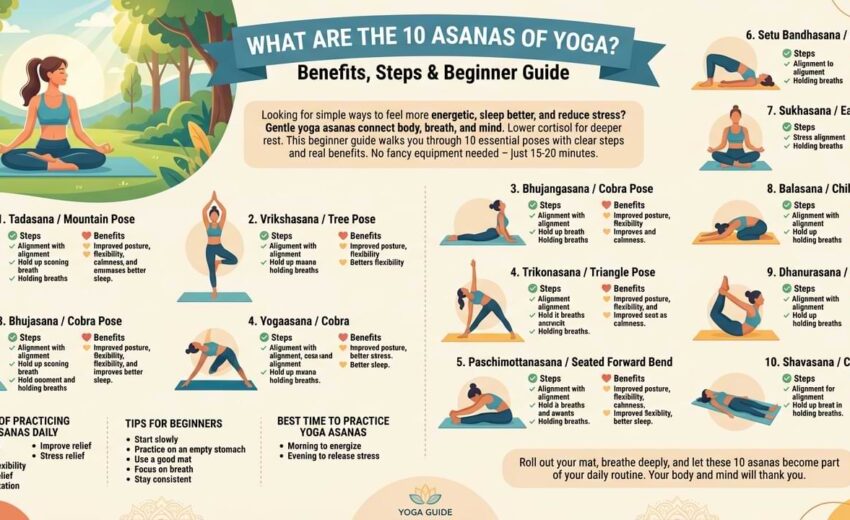
What are the 10 Asanas of Yoga? Benefits, Steps & Beginner Guide
Are you looking for simple ways to feel more energetic, sleep better at night, and reduce daily stress? The 10 asanas of yoga might be exactly what you need.
Yoga asanas are the physical postures that form the heart of any yoga practice. They are gentle, powerful movements that connect your body, breath, and mind. Whether you are a complete beginner or someone who wants a consistent daily yoga routine, these 10 asanas of yoga are perfect for you.
In today’s fast-paced world, most of us sit for long hours, scroll on phones, and carry tension in our shoulders and back. A short yoga session using these yoga poses can improve flexibility, ease back pain, calm racing thoughts, and prepare your body for deep, restful sleep. Studies and thousands of practitioners agree – regular yoga asanas help lower cortisol (stress hormone) levels, which directly leads to better sleep and a happier mind.
If you are health-conscious and want to start small, this beginner-friendly guide to the 10 asanas of yoga will walk you through each pose with clear steps and real benefits. No fancy equipment needed – just a yoga mat and 15–20 minutes of your day. Let’s get started!
What Are Yoga Asanas?
Yoga asanas are specific body positions that were developed thousands of years ago in India. The word “asana” literally means “seat” or “posture.” These yoga poses are not just exercises; they are mindful movements that balance your physical body while calming your mind.
Physically, yoga asanas stretch muscles, strengthen the core, improve posture, and increase blood flow. Mentally, they teach you to focus on your breath, which reduces anxiety and improves concentration. One of the biggest bonuses? Better sleep. When you practice yoga asanas regularly, your nervous system shifts from “fight or flight” to “rest and digest” mode, making it easier to fall asleep and stay asleep.
Whether you want yoga for beginners or a deeper daily yoga routine, these postures are safe, effective, and adaptable. You don’t need to be flexible or strong – you just need to show up on your mat.
What Are the 10 Asanas of Yoga?
Here are the 10 asanas of yoga that every beginner should know. These yoga poses form a complete mini-sequence that covers standing, balancing, backbends, forward bends, and deep relaxation. Practicing them together creates a balanced daily yoga routine that supports flexibility, strength, and peaceful sleep.
1. Tadasana (Mountain Pose)
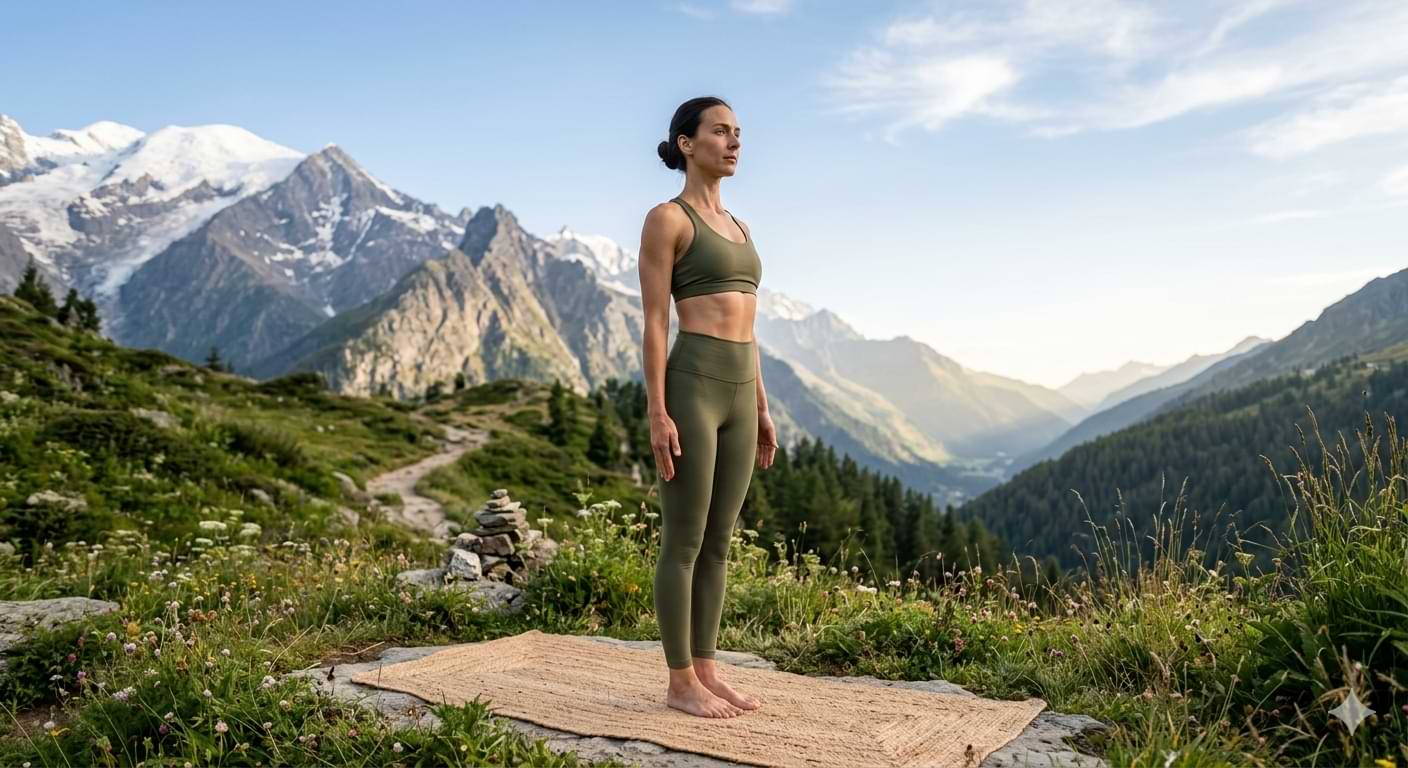
Steps:
- Stand with your feet together or hip-width apart.
- Press your weight evenly into all four corners of your feet.
- Engage your thighs, lift your chest, and roll your shoulders back and down.
- Keep your chin parallel to the floor and gaze straight ahead.
- Hold for 5–8 deep breaths.
Benefits: Tadasana is the foundation of all standing yoga poses. It improves posture, strengthens legs and core, and brings awareness to your body alignment. Beginners love it because it instantly makes them feel taller and more confident. It also calms the mind and prepares you for the rest of your 10 asanas of yoga practice.
2. Vrikshasana (Tree Pose)
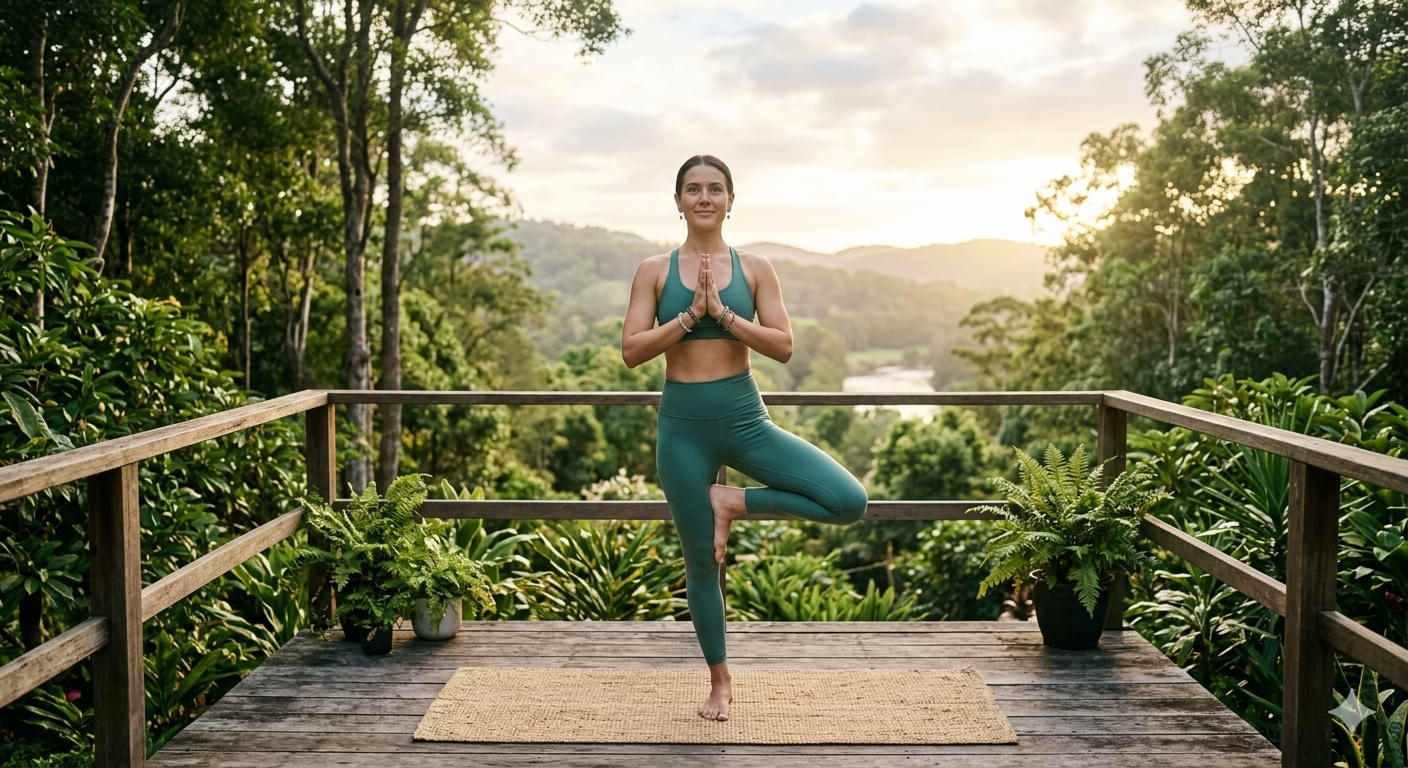
Steps:
- From Tadasana, shift weight to your left foot.
- Place your right foot on the inside of your left thigh (or calf if that’s too high).
- Bring palms together at your chest or raise arms overhead like branches.
- Fix your gaze on a steady point in front of you.
- Hold 5–10 breaths, then switch sides.
Benefits: This balancing pose builds focus and concentration while strengthening ankles and legs. It boosts self-confidence and teaches patience – perfect for stressed minds. Regular practice also improves coordination and helps you feel grounded, which supports better sleep at night.
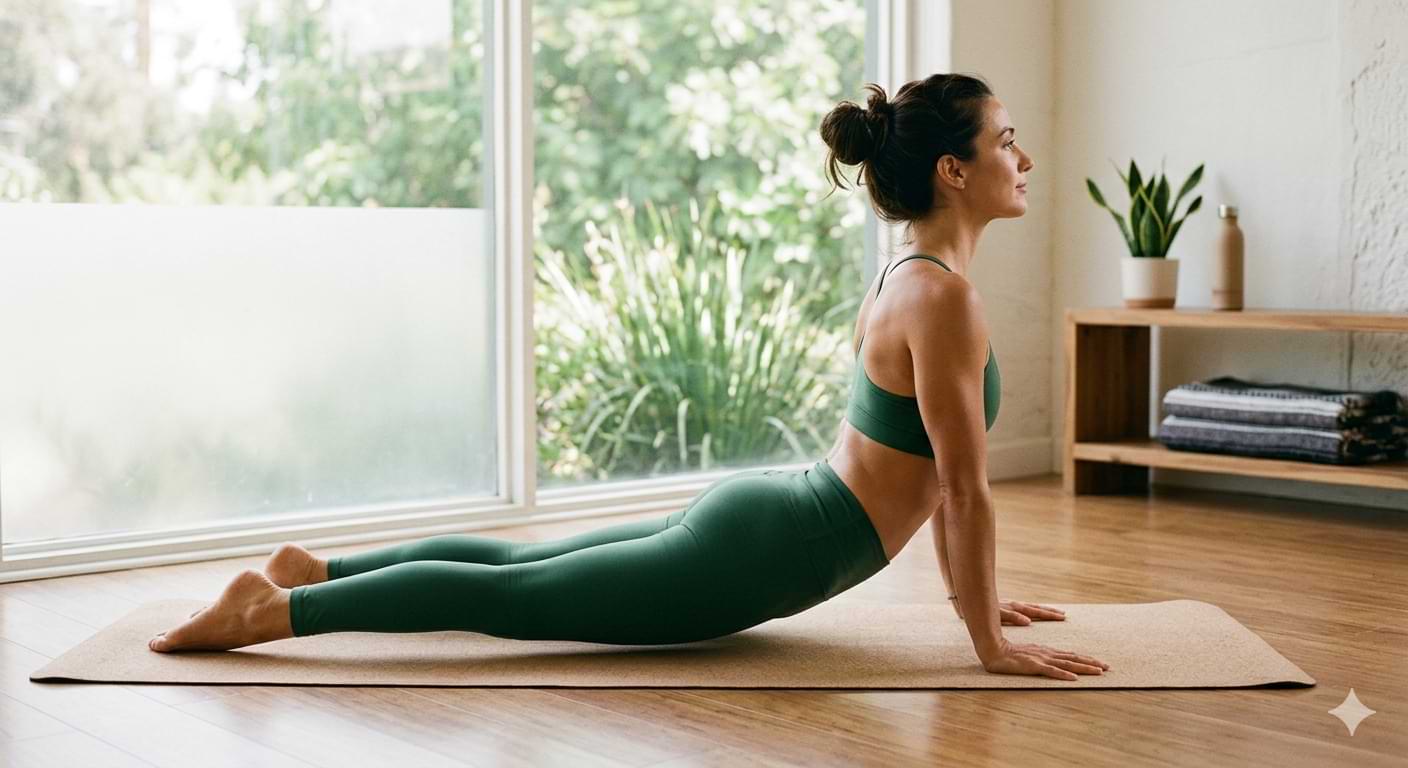
3. Bhujangasana (Cobra Pose)
Steps:
- Lie on your stomach, hands under shoulders, elbows tucked.
- Inhale and gently lift your chest, keeping elbows slightly bent.
- Press the tops of your feet and pubic bone into the mat.
- Look forward or slightly up without straining your neck.
- Hold for 15–30 seconds, then lower slowly.
Benefits: Cobra pose is a gentle backbend that strengthens the spine and opens the chest. It relieves upper back tightness from desk work and improves breathing capacity. Many people notice less tension and deeper relaxation after practicing it – great for winding down before bed.
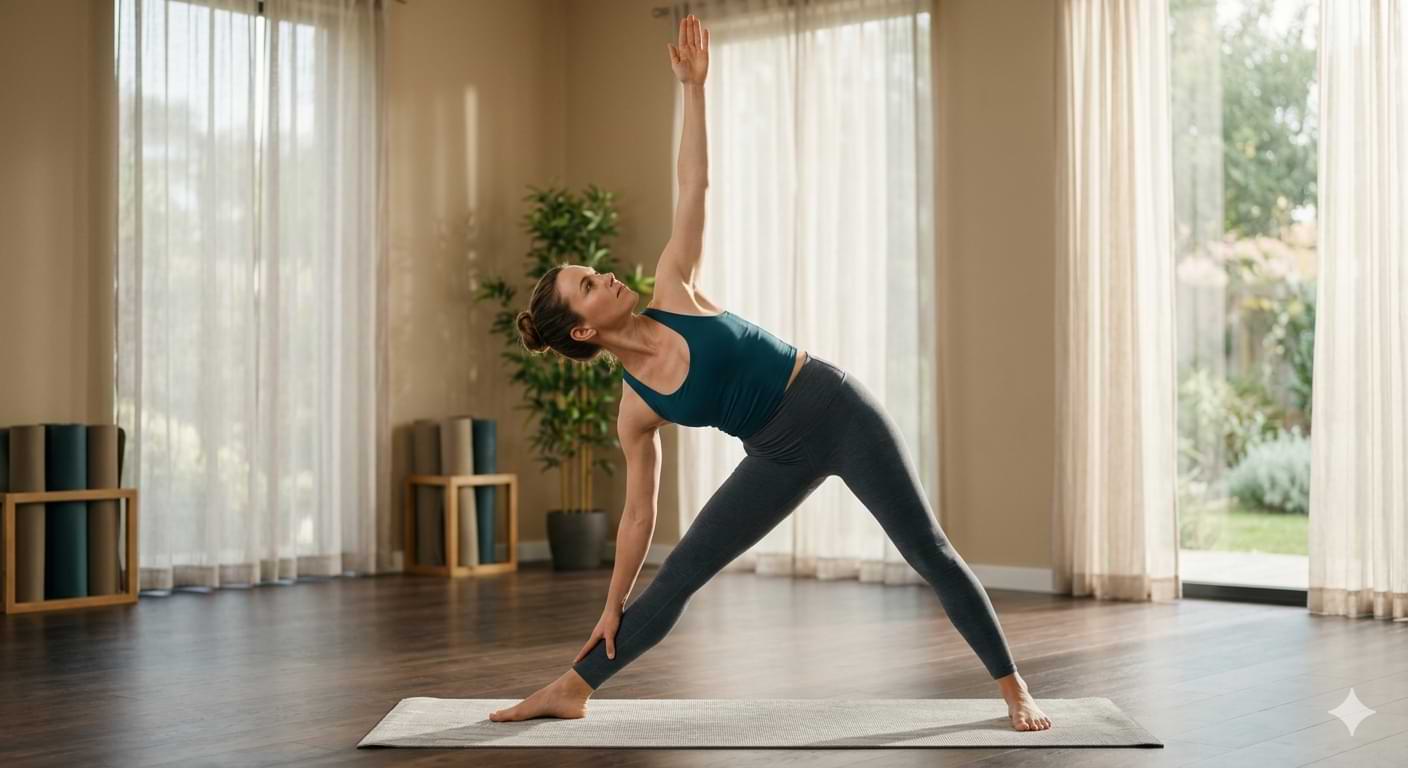
4. Trikonasana (Triangle Pose)
Steps:
- Stand with feet wide apart (about 3–4 feet).
- Turn your right foot out 90 degrees and left foot slightly in.
- Extend arms to the sides, then hinge at the hip and reach right hand toward right shin or ankle.
- Left arm reaches straight up.
- Gaze up at your left hand or forward. Hold 5 breaths, then switch sides.
Benefits: Triangle pose stretches the sides of the body, hamstrings, and hips. It improves digestion, strengthens legs, and energizes the entire system. It is one of the best yoga poses for releasing side-body tension that often builds up during the day.
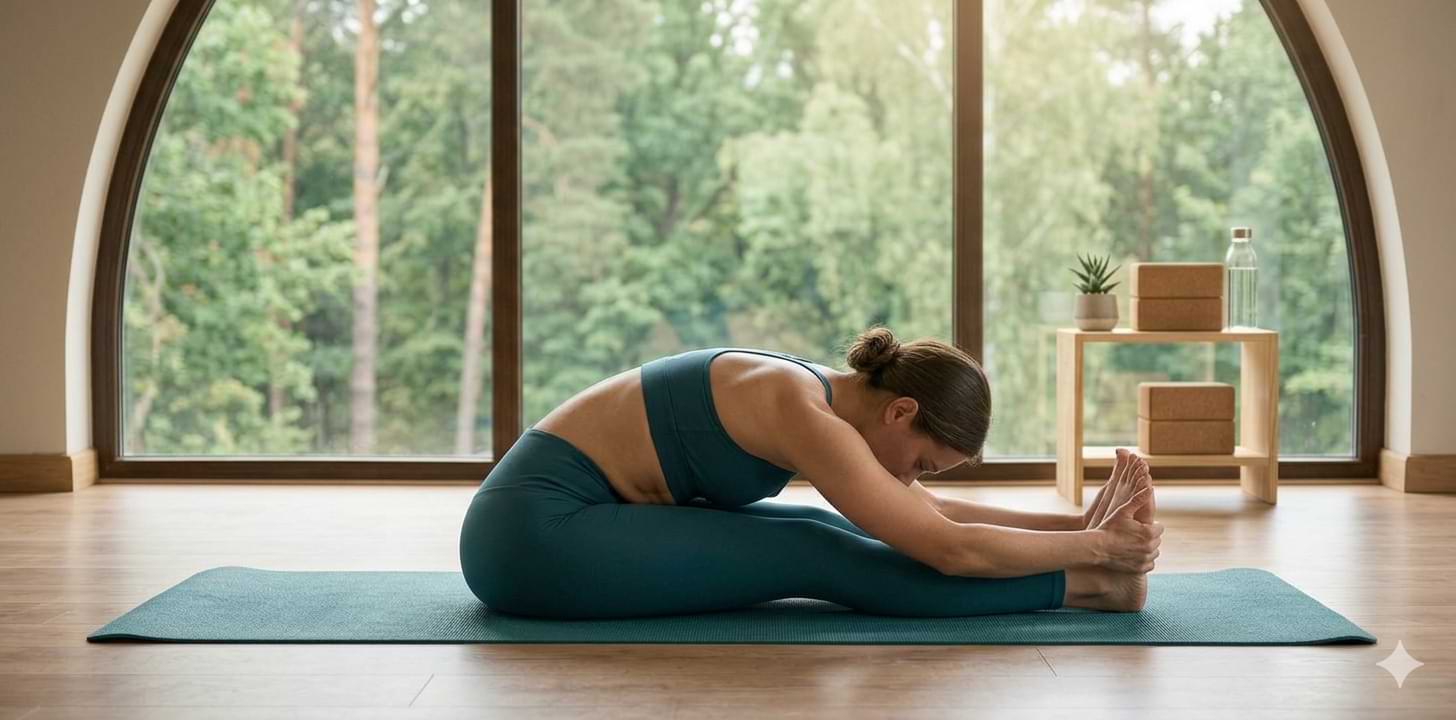
5. Paschimottanasana (Seated Forward Bend)
Steps:
- Sit with legs stretched straight in front.
- Inhale and lengthen your spine.
- Exhale and fold forward from the hips, reaching for your feet.
- Relax your head and neck.
- Hold for 30–60 seconds with soft breathing.
Benefits: This forward bend calms the nervous system and stretches the entire back of the body. It relieves lower back stiffness and helps quiet racing thoughts – ideal for anyone struggling with sleep.
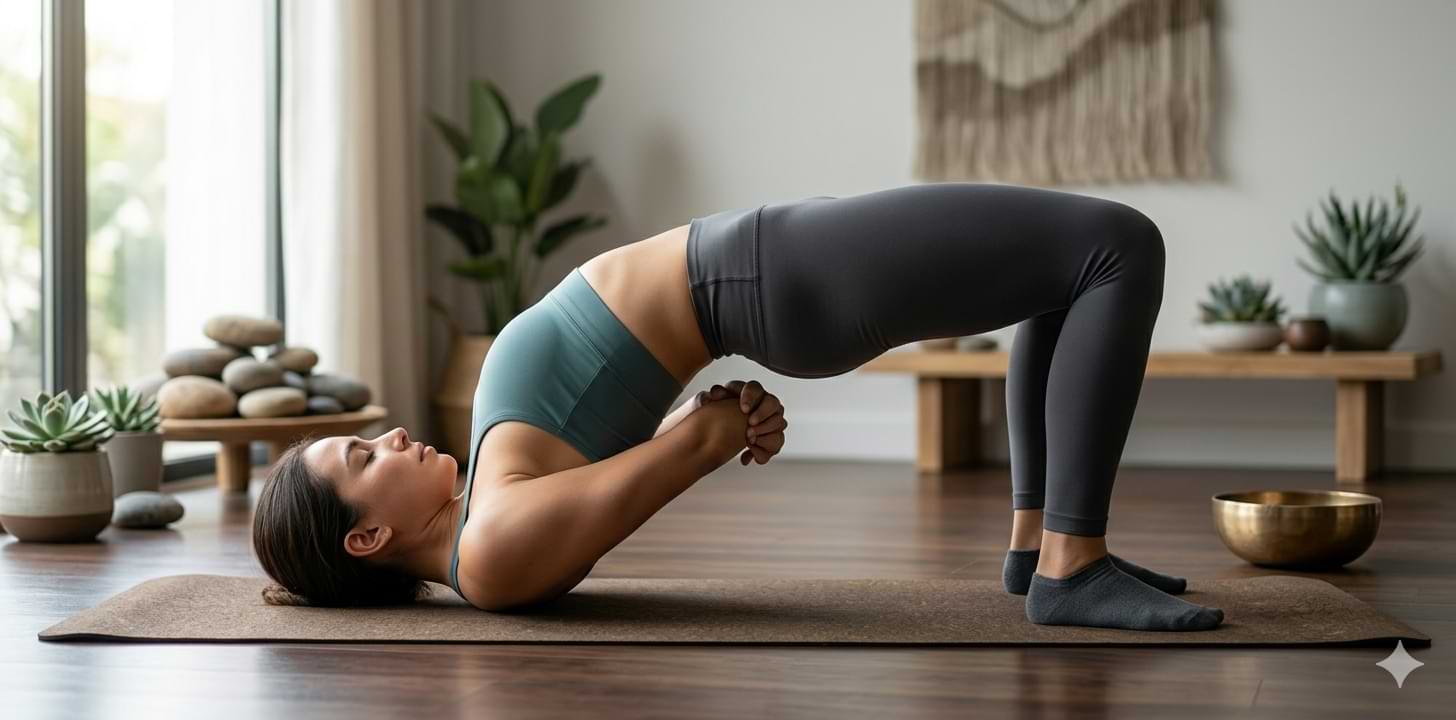
6. Setu Bandhasana (Bridge Pose)
Steps:
- Lie on your back, knees bent, feet hip-width apart.
- Press feet into the mat and lift your hips toward the ceiling.
- Interlace fingers under your back or keep palms down.
- Keep thighs parallel to the floor.
- Hold 20–30 seconds, then lower slowly.
Benefits: Bridge pose strengthens the back, glutes, and core while opening the chest and hips. It is excellent for posture correction and mild back pain relief. The gentle inversion also promotes relaxation and better circulation.
7. Sukhasana (Easy Pose)
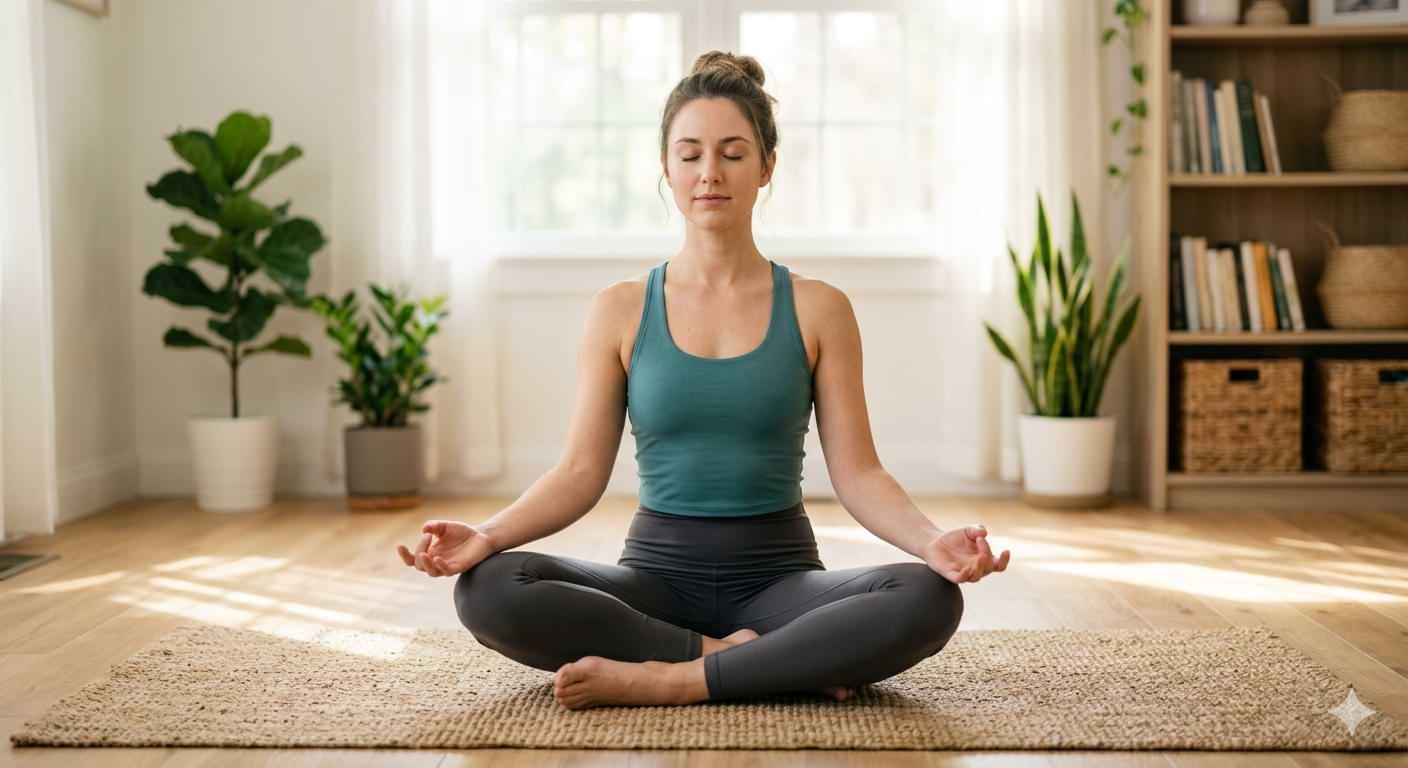
Steps:
- Sit on the floor with legs crossed comfortably.
- Place hands on knees, palms up or down.
- Sit tall, relax shoulders, and close your eyes.
- Focus on slow, deep breathing for 1–2 minutes.
Benefits: Sukhasana is the classic meditation posture. It improves posture, opens hips gently, and prepares the mind for calm. Beginners use it to start or end their daily yoga routine.
8. Balasana (Child’s Pose)
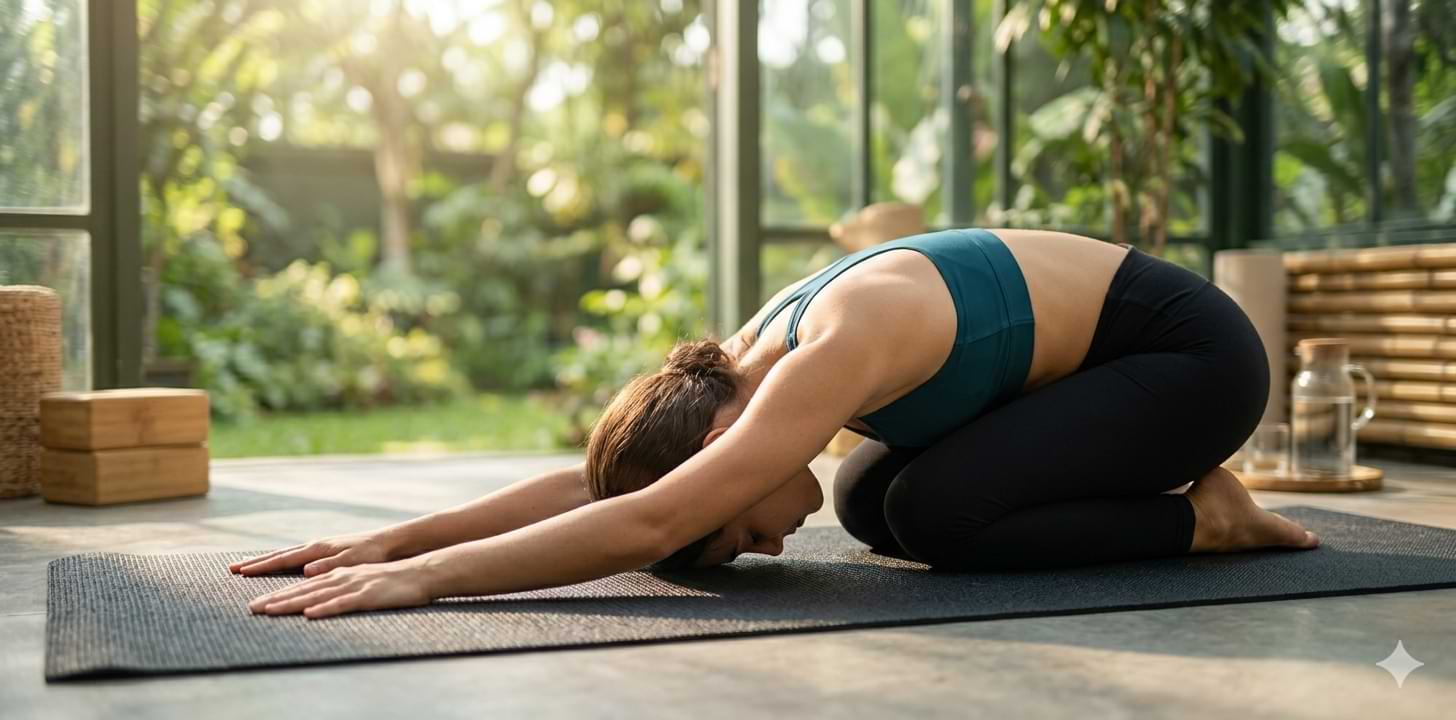
Steps:
- Kneel on the mat, big toes touching.
- Sit back on your heels and fold forward.
- Extend arms in front or rest them by your sides.
- Let your forehead rest on the mat.
- Breathe deeply and stay as long as you like.
Benefits: Child’s pose is a wonderful resting posture that releases lower back tension and calms the mind instantly. It is one of the most soothing yoga poses for stress relief and better sleep.
9. Dhanurasana (Bow Pose)
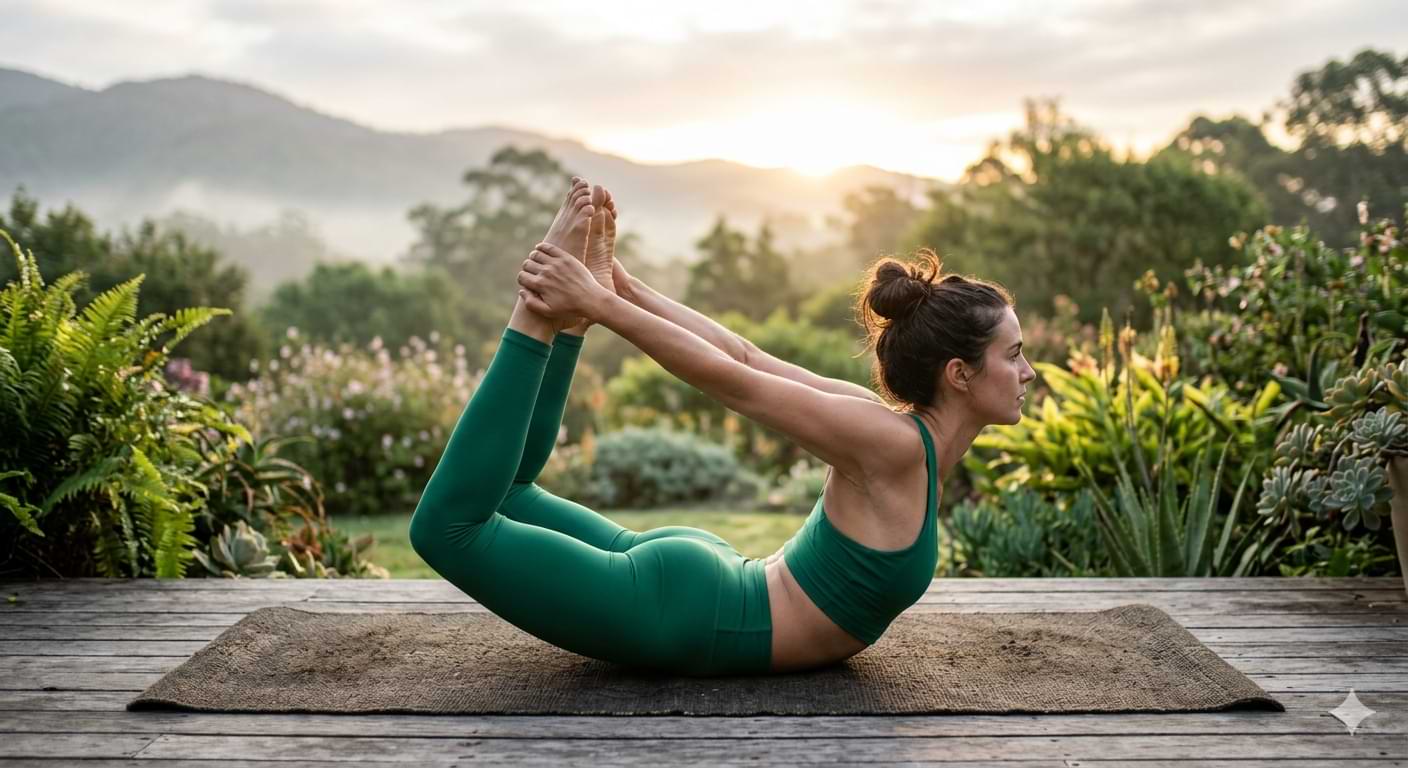
Steps:
- Lie on your stomach.
- Bend knees and reach back to hold your ankles.
- Inhale and lift chest and thighs off the mat.
- Keep knees hip-width apart.
- Hold for 15–20 seconds, then release.
Benefits: Bow pose deeply opens the front of the body, strengthens the back, and improves flexibility. It energizes the body while releasing stored tension – a fantastic way to feel lighter and happier.
10. Shavasana (Corpse Pose)
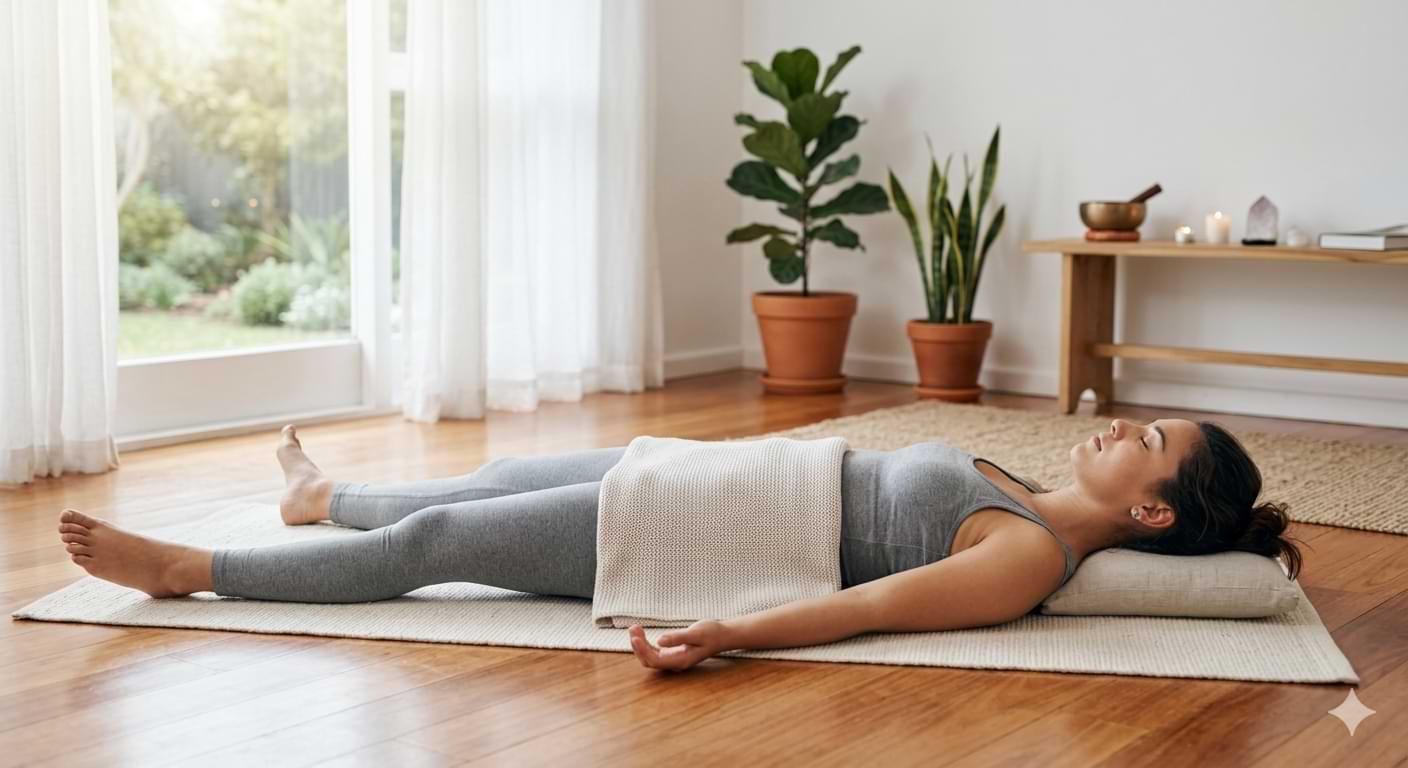
Steps:
- Lie flat on your back, legs slightly apart, arms by your sides, palms up.
- Close your eyes and relax every part of your body.
- Breathe naturally and let go of all effort.
- Stay for 5–10 minutes (or longer before bed).
Benefits: Shavasana is the most important pose for deep relaxation. It integrates all the benefits of the previous 10 asanas of yoga, lowers heart rate, and prepares your body for restful sleep. Many people fall asleep during Shavasana – that’s how powerful it is!
Benefits of Practicing Yoga Asanas Daily
Adding these 10 asanas of yoga to your life brings amazing changes:
- Better sleep – Gentle stretching and deep breathing lower stress hormones and signal your body it’s time to rest.
- Stress relief – Mindfulness and controlled breathing calm an overactive mind.
- Improved flexibility – Regular practice loosens tight muscles and joints.
- Back pain relief – Stronger core and spine alignment reduce daily aches.
- Improved breathing – Deep breaths increase oxygen flow and lung capacity.
- Mental relaxation – You feel more centered, patient, and positive.
A consistent daily yoga routine of just 20 minutes can transform how you feel physically and emotionally.
Tips for Beginners Before Practicing Yoga
- Start slowly – 10–15 minutes is enough in the beginning.
- Practice on an empty stomach or wait 2–3 hours after meals.
- Use a good yoga mat for grip and comfort.
- Focus on your breath more than perfecting the pose.
- Stay consistent – even 3–4 days a week brings results.
- Listen to your body and never force a stretch.
Best Time to Practice Yoga Asanas
Morning practice energizes you and sets a calm tone for the day. Evening practice (before dinner) helps release the day’s stress and improves sleep quality. Choose what fits your schedule. Aim for 20–45 minutes, 5–6 days a week. Consistency matters more than duration.
Conclusion
The 10 asanas of yoga offer a simple, powerful way to care for your body and mind. From building strength in Tadasana to finding total peace in Shavasana, these yoga poses deliver real benefits – better sleep, less stress, more flexibility, and a happier daily life.
You don’t need to be perfect. You just need to begin. Roll out your mat, breathe deeply, and let these 10 asanas of yoga become part of your daily yoga routine. Your body and mind will thank you every single day.
FAQ
The 10 asanas of yoga are beginner-friendly postures including Tadasana, Vrikshasana, Bhujangasana, and Shavasana. They form a complete set that improves strength, flexibility, and relaxation.
Yes! All 10 asanas of yoga in this guide are safe and modifiable for beginners. Start slowly, use props if needed, and focus on proper breathing.
A 20–30 minute session is perfect for beginners. As you grow comfortable, you can extend to 45 minutes for deeper benefits of yoga.
Absolutely. Poses like Balasana, Paschimottanasana, and Shavasana calm the nervous system, reduce anxiety, and prepare your body for deep, restorative sleep.
-
What are the 10 Asanas of Yoga? Benefits, Steps & Beginner Guide
Are you looking for simple ways to feel more energetic, sleep better at night, and reduce daily stress? The 10 asanas of yoga might be …
-
Sleeping Positions: Types, Benefits, & Best Positions
Sleep is not just about how long you rest—it’s also about how you rest. The way your body is positioned during sleep can influence everything …
-
ह्यूमिडिफायर कैसे काम करता है?
क्या आप जानते हैं कि आपके घर के वातावरण में नमी का स्तर कितना महत्वपूर्ण है? जब हवा बहुत सूखी होती है, तो यह आपकी …
-
How Long Should You Keep a Memory Foam Pillow?
Memory foam pillows have gained appeal over the years owing to their aptitude for contouring to assume the shape of one’s head and neck for …
-
Which Is the Best Humidifier to Buy in India?
As the climate swings between scorching heat and chilly winters, many households in India face dry air challenges. Enter the humble humidifier—a device that might …