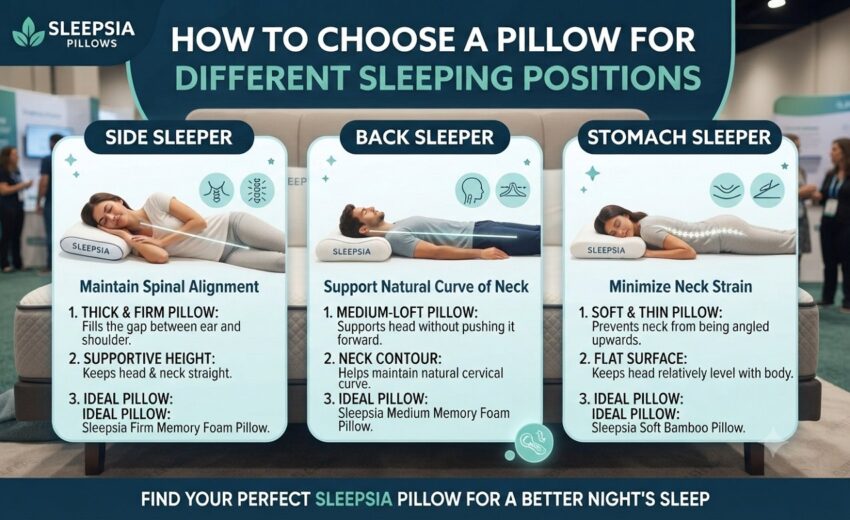
How to Choose a Pillow for Different Sleeping Positions
Choosing the right pillow is an important part of creating a comfortable sleep environment. The pillow you use should complement your sleeping position, mattress firmness, body shape, and personal comfort preferences. A pillow that feels comfortable for someone who sleeps on their side may not provide the same support for someone who sleeps on their back or stomach. Understanding these differences can help you make a more informed decision when shopping for bedding. Whether you are looking for a pillow for side sleepers, a supportive option for back sleeping, or a low-profile pillow for stomach sleeping, this guide explains the features to consider before buying one.
Why Does Your Sleeping Position Matter When Choosing a Pillow?
Your sleeping position influences the distance between your head, neck, shoulders, and mattress. A pillow fills this space and helps keep your head in a comfortable, neutral position throughout the night.
The right pillow should support your head without pushing it too far forward, backward, or sideways. If the pillow is too high or too low, you may find it difficult to maintain a comfortable sleeping posture.
Sleep position is not the only factor to consider. Mattress firmness, pillow material, body proportions, and how much the pillow compresses under your head also affect the support you experience.
How to Choose a Pillow for Side Sleeping
Side sleeping is a common sleeping position, but it creates a noticeable gap between the head and mattress because of the shoulder. A suitable pillow should fill this gap without forcing the head upward.
What Type of Pillow Is Suitable for Side Sleepers?
Side sleepers often prefer a medium-to-high-loft pillow with enough firmness to maintain its shape under the weight of the head. The ideal height depends on shoulder width, mattress firmness, and how deeply the shoulder sinks into the mattress.
A side sleeper pillow should provide enough cushioning around the head and neck while keeping the head aligned with the rest of the body.
Features to Consider
- Medium or high pillow loft, depending on body proportions
- Supportive filling that does not collapse excessively
- Comfortable surface material
- Shape that accommodates the head and neck
- Suitable firmness for the mattress and sleeping style
Some people also use a pillow between their knees while sleeping on their side. This may help them find a more comfortable position by reducing the tendency for the upper leg to rotate forward.
How to Choose a Pillow for Back Sleeping
Back sleepers generally have a smaller gap between the head and mattress than side sleepers. Therefore, they may not need a pillow with as much height.
What Is the Best Pillow Height for Back Sleepers?
A medium-loft pillow is often a useful starting point for back sleepers. It should support the natural curve of the neck without pushing the chin too far toward the chest.
The ideal pillow height will depend on how firm your mattress is and how much your head sinks into the pillow.
Features to Look For
- Medium pillow height
- Balanced firmness
- Comfortable neck support
- A shape that does not tilt the head excessively
- Filling that provides consistent cushioning
A cervical pillow may be worth considering if you prefer a contoured design that supports the head and neck. Sleepsia offers an orthopedic memory foam cervical pillow designed for head and neck support.
The suitability of a contoured pillow depends on its shape and height, so check the product specifications and comfort requirements before purchasing.
How to Choose a Pillow for Stomach Sleeping
Stomach sleeping can place the neck in a rotated position for extended periods. A thick pillow may raise the head too much and increase the angle of the neck.
Should Stomach Sleepers Use a Thin Pillow?
Stomach sleepers generally prefer a low-loft, soft pillow. Some may find it more comfortable to sleep without a pillow under the head, depending on their body proportions and mattress.
A pillow for stomach sleepers should not create excessive elevation. The goal is to avoid adding unnecessary height beneath the head.
Features to Consider
- Low pillow loft
- Soft or easily compressible filling
- Minimal elevation of the head
- Comfortable pillow cover
- A profile that suits your body and mattress
If you regularly sleep on your stomach and experience neck discomfort, consider experimenting with a different sleeping position or a lower pillow. Persistent pain should be discussed with a healthcare professional.
How to Choose a Pillow for Combination Sleepers
Combination sleepers change positions during the night, often moving between side and back sleeping. They may need a pillow that works reasonably well in more than one position.
Which Pillow Works for Multiple Sleeping Positions?
An adjustable pillow can be a practical option for combination sleepers. Some designs allow you to add or remove filling to change the pillow height.
A memory foam pillow may also be worth considering if you prefer a pillow that responds to the shape of your head and neck. However, different memory foam designs have different levels of firmness, contouring, and compression.
What to Check Before Buying
- Whether the pillow works for your primary sleeping position
- Whether its height suits your secondary position
- How easily you can change positions
- Whether the filling retains enough support
- Whether the pillow feels comfortable throughout the night
If you frequently move between side and back sleeping, choose a pillow based on the position you spend the most time in while making sure it remains comfortable when you turn.
How Pillow Loft and Firmness Affect Sleeping Comfort
Pillow loft refers to the height or thickness of a pillow. Firmness describes how soft or resistant it feels when pressure is applied.
Both features influence how your head and neck are supported.
Low, Medium, and High Pillow Loft
Low-Loft Pillow
A low-loft pillow is generally thinner and may suit stomach sleepers or people who prefer minimal elevation.
Medium-Loft Pillow
A medium-loft pillow can be a useful starting point for back sleepers and some combination sleepers.
High-Loft Pillow
A high-loft pillow may suit side sleepers who need to fill a larger gap between the head and mattress.
These categories are general guidelines rather than fixed rules. A pillow’s loft after compression may be different from its advertised height, so consider how it feels when you lie down.
Does Mattress Firmness Affect Pillow Choice?
Yes. A softer mattress allows the shoulder and body to sink more deeply into the surface. This can reduce the distance between the head and mattress.
A firmer mattress may create a larger gap, particularly for side sleepers. In that case, a pillow with more loft may feel more comfortable.
When choosing a neck support pillow, consider both your sleeping position and mattress firmness rather than selecting a pillow based on height alone.
How to Choose the Right Pillow Material
Pillow materials affect softness, support, breathability, and how much the pillow changes shape under pressure.
Memory Foam Pillow
Memory foam pillows respond to pressure and may contour around the head and neck. Some designs have a shaped profile, while others use shredded foam or a traditional pillow shape.
A memory foam pillow for sleeping may suit people who prefer a more structured feel, but the firmness and contouring vary by product.
Microfiber Pillow
Microfiber pillows often have a soft, traditional pillow feel. They may be suitable for people who prefer a more flexible and familiar type of cushioning.
The amount of filling and the construction determine how much support the pillow provides.
Cooling or Gel-Infused Pillow
Some pillows use ventilated foam or cooling gel features. These designs may appeal to people who prefer a cooler-feeling pillow surface.
However, temperature comfort also depends on the pillow cover, room temperature, bedding, and individual preferences.
How to Choose a Pillow for Neck and Shoulder Comfort
People who experience neck or shoulder discomfort may want to pay closer attention to pillow height, shape, and firmness.
Is an Orthopedic Pillow Worth Considering?
An orthopedic pillow may have a contoured design intended to support the head and neck. Some designs include raised edges and a central area for the head.
The term orthopedic does not mean every pillow will suit every person. A pillow that works comfortably for one sleeper may feel too high, too firm, or too structured for another.
What Should You Check?
- Pillow dimensions and height
- Contour shape
- Firmness and material
- Recommended sleeping positions
- Return or exchange policy, where available
If you have ongoing neck pain, numbness, tingling, or symptoms following an injury, seek advice from a qualified healthcare professional before relying on a pillow to address the problem.
How to Find the Right Pillow for Your Needs
Before purchasing a pillow, compare the product specifications with your sleeping habits.
Use This Pillow Selection Checklist
Sleeping Position
Identify whether you mainly sleep on your side, back, stomach, or a combination of positions.
Pillow Height
Choose a height that fills the space between your head and mattress without creating an uncomfortable angle.
Firmness
Consider whether you prefer a soft, medium, or firmer pillow and how much support you need.
Material
Compare memory foam, microfiber, and other filling options based on comfort, maintenance, and temperature preferences.
Product Specifications
Review dimensions, care instructions, and the sleeping positions recommended by the manufacturer.
If you want to compare different designs, explore the Sleepsia sleeping pillows collection. It includes options such as cervical, contour, memory foam, and cooling gel pillows.
You can also explore the Sleepsia pillow collection to compare different pillow styles and support products.
Conclusion
Choosing a pillow for different sleeping positions starts with understanding how your head, neck, and shoulders interact with the mattress. Side sleepers often need more loft to fill the gap created by the shoulder, while back sleepers may prefer a medium-height pillow. Stomach sleepers generally benefit from a lower profile to avoid excessive head elevation.
Pillow material, firmness, mattress feel, and personal comfort are equally important. Instead of choosing a pillow based only on its name or advertised benefits, compare its dimensions, construction, and recommended sleeping positions.
A well-chosen pillow should feel comfortable and help you maintain a natural, relaxed sleeping posture. Take time to compare your options and select a pillow that suits your individual sleep habits.
Also Read:- Memory Foam Pillow Buying Guide: Comfort, Support & Fit
Frequently Asked Questions
1. Which pillow is best for side sleepers?
Side sleepers often prefer a medium-to-high-loft pillow that fills the gap between the head and mattress. The ideal height depends on shoulder width, mattress firmness, and how much the pillow compresses.
2. What type of pillow should back sleepers use?
Back sleepers commonly prefer a medium-loft pillow that supports the head and neck without pushing the chin too far forward. A contoured pillow may be an option if its shape feels comfortable.
3. Which pillow is suitable for stomach sleepers?
Stomach sleepers generally prefer a thin, soft, low-loft pillow. Some may find sleeping without a pillow under the head more comfortable.
4. Is a memory foam pillow suitable for all sleeping positions?
Memory foam pillows are available in different shapes and heights. Some are designed for side or back sleeping, while adjustable or traditional-shaped options may suit a wider range of preferences. Check the product specifications before choosing.
5. How do I know if my pillow is too high?
If your pillow pushes your head noticeably upward or causes your chin to tilt toward your chest, it may be too high for your sleeping position. Consider a lower pillow and assess whether it feels more comfortable.
6. Can a pillow help with neck discomfort?
A pillow that provides comfortable support may help some people maintain a more relaxed sleeping posture. However, pillows do not treat every cause of neck pain. Seek medical advice if discomfort persists or is accompanied by other symptoms.
7. How often should I replace my pillow?
There is no single replacement schedule for every pillow. Its condition, filling, hygiene, and ability to provide comfortable support are more useful indicators. Follow the manufacturer’s care and replacement guidance.
8. Where can I compare pillows for different sleeping positions?
You can compare pillow types, materials, and product specifications in the Sleepsia sleeping pillows collection and select a design that suits your sleeping position and comfort preferences.