Compare Bamboo Pillow, Memory Foam Pillow and Microfiber Pillow
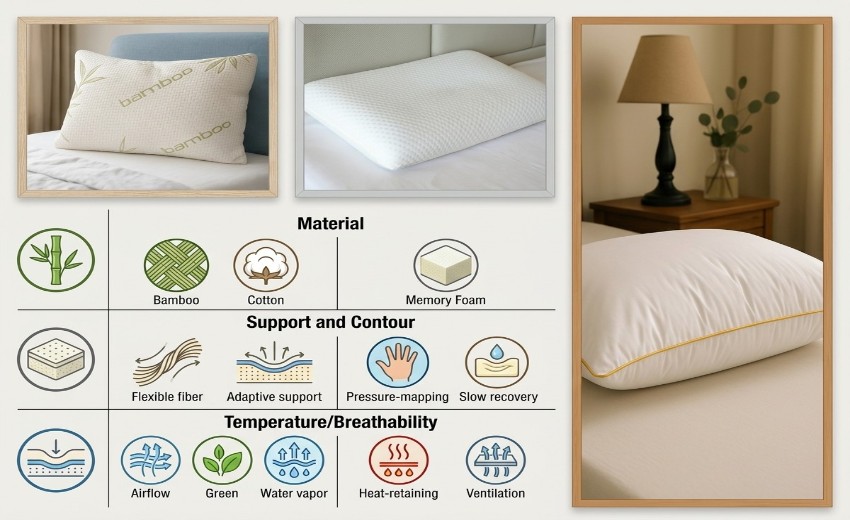
Walk into any pillow aisle and you will find three popular choices competing for your attention: bamboo, memory foam and microfiber. Each promises better sleep, but they feel very different under your head. Bamboo pillows are known for breathability and eco-friendly appeal, memory foam pillows for contoured support, and microfiber pillows for a plush, fluffy softness at a friendly price. The right pick depends on how you sleep, how warm you run at night and how much support your neck needs. In this guide, we compare all three side by side on comfort, support, cooling, durability, care and value, so you can choose the pillow that fits your body and your budget.
Why Pillow Material Matters
The material inside a pillow decides how it supports your head, how much heat it holds and how long it keeps its shape. Two pillows with the same size can feel completely different because of the filling and the cover. If you want a deeper look at the options, this guide to pillow filling material explains how each type behaves.
Support and Spinal Alignment
A good pillow keeps your head level with your spine so your neck is not bent up or down. Firmer, contouring fillings tend to hold alignment better, while very soft fillings can compress quickly under the weight of the head.
Sleeping Position Matters
Side sleepers generally need a higher, firmer pillow, back sleepers a medium one, and stomach sleepers a thin, soft one. Keep your position in mind as you read each comparison below.
The Cover Counts Too
The outer fabric touches your skin and affects temperature and feel. A breathable cover can make an average pillow feel much cooler, and this article on the best pillow cover material for sleeping helps you choose.
Bamboo Pillows: Cool, Breathable and Eco-Friendly
Bamboo pillows use bamboo-derived fabric, fibre or a bamboo-based fill that feels smooth and breathable. They are popular with warm sleepers and with people who prefer more sustainable materials. You can explore the full range of bamboo pillows to compare shapes, sizes and firmness levels.
A Closer Look at a Bamboo Pillow
For a practical example, this Bamboo Pillow combines breathable bamboo comfort with supportive padding, making it a good option for sleepers who want a cooler, fresher feel through the night.
Key Benefits of Bamboo
Bamboo is naturally breathable and moisture-wicking, which helps reduce that damp, sticky feeling. To see the full list, read about the benefits of bamboo pillows and this separate overview of bamboo pillow benefits for everyday sleepers.
A Fresh Take on Better Sleep
Many people see bamboo as a modern upgrade to traditional bedding. This piece on an innovative sleep solution explains why bamboo is gaining attention.
Environmental Advantages
Bamboo grows quickly and needs fewer resources than many crops, which appeals to eco-conscious buyers. Learn more in this article on 5 Ways Bamboo Pillows Promote a Healthier Planet.
Possible Drawbacks
Quality varies between bamboo products, and some are not as firm as a dedicated orthopedic pillow. Check the filling details and firmness before you buy, especially if you need strong neck support.
Memory Foam Pillows: Contoured Support
Memory foam softens with body heat and moulds to the shape of your head and neck, then slowly returns to its original form. This contouring is why many people with neck stiffness choose it, and it is especially popular with back and side sleepers who want consistent support.
Advantages of Memory Foam
Memory foam spreads pressure evenly, holds its shape for a long time and reduces the need to keep adjusting the pillow through the night. It is usually the most supportive of the three materials in this comparison.
Is Memory Foam Good or Bad?
Like any material, it has strengths and trade-offs. Standard foam can feel warm, may smell slightly when new and can feel too firm for some. For a balanced view, read this article on whether a memory foam pillow is good or bad.
Gel and Ventilated Options
To address heat, many memory foam pillows now include cooling gel or ventilation holes. These designs help the pillow feel cooler and more breathable than traditional solid foam.
Microfiber Pillows: Plush, Soft and Affordable
Microfiber pillows are filled with very fine synthetic fibres that mimic the fluffy feel of down. They are light, easy to adjust and generally budget-friendly, which makes them a favourite for guest rooms and for sleepers who love a cushioned feel. Browsing the super soft pillow collection is an easy way to see the different loft and softness levels available.
A Closer Look at a Microfiber Pillow
If you want something gentle and cushiony, this soft pillow offers a plush, hotel-style feel that works well for stomach sleepers and anyone who dislikes a firm surface.
Why People Choose Microfiber
Microfiber is fluffy, lightweight and often allergy-friendly, and it typically costs less than foam. For more on how it supports different sleepers, see these micro fibre sleeping pillows tips.
Limitations of Microfiber
Because the fibres compress over time, a microfiber pillow may flatten sooner than foam and offer less targeted neck support. Regular fluffing helps, but heavy users may need to replace it more often.
How to Clean Microfiber
One advantage is that many microfiber pillows are easier to wash than foam. Follow this guide on how to wash microfiber pillow models, and always check the care label first.
Head-to-Head: Microfiber vs Memory Foam
These two are often compared because they sit at opposite ends of the softness scale. Memory foam is firm and contouring, while microfiber is soft and fluffy. If you are torn between them, this detailed comparison of microfiber vs memory foam pillow options breaks down the differences.
Who Should Choose Which?
Choose memory foam if you need firm, consistent neck support. Choose microfiber if you prefer a soft, adjustable pillow and want to keep costs low. Neither is better for everyone, because comfort is personal.
Head-to-Head: Bamboo vs Memory Foam
Bamboo and memory foam are sometimes combined, but they also compete directly. Bamboo focuses on breathability and a natural feel, while memory foam focuses on support. This article on bamboo pillow vs memory foam pillow choices explores the trade-offs in detail.
Temperature and Comfort
Bamboo usually feels cooler and fresher, which suits warm climates and hot sleepers. Memory foam can retain heat unless it has gel or ventilation, though many people accept this for the better support it gives.
Durability and Value
Memory foam generally holds its shape longest. Bamboo and microfiber vary by quality, so look at construction, density and cover material rather than judging by price alone.
Comparison Table: Bamboo vs Memory Foam vs Microfiber
The table below gives a quick overview of how the three pillow types compare on the factors that matter most for everyday sleep.
| Feature | Bamboo Pillow | Memory Foam Pillow | Microfiber Pillow |
|---|---|---|---|
| Feel | Smooth, light, natural | Firm, contouring | Soft, fluffy, plush |
| Support | Moderate | High | Low to moderate |
| Cooling | Breathable and cooler | Warmer unless gel or ventilated | Moderate airflow |
| Best for | Hot sleepers, eco-conscious buyers | Neck stiffness, back and side sleepers | Stomach sleepers, soft-pillow lovers |
| Durability | Depends on build quality | Usually longest lasting | May flatten sooner |
| Washing | Usually wash cover; check label | Spot clean; do not machine wash foam | Often easier to wash |
| Price | Mid range | Mid to higher range | Budget friendly |
How to Choose the Right Pillow for You
Start with your sleeping position, then consider temperature, neck comfort, allergies and budget. If you wake up with a stiff neck, prioritise support. If you wake up sweaty, prioritise breathability. If you simply want a soft cushion, microfiber may be all you need.
Quick Recommendations
Side sleepers and people with neck pain often do well with memory foam. Hot sleepers may prefer bamboo or a gel foam pillow. Stomach sleepers and those who like a fluffy feel can choose microfiber.
When to Replace Your Pillow
Most pillows last one to three years depending on material and care. Replace yours if it becomes flat, lumpy, smelly or stops supporting your neck.
Conclusion
There is no single winner among bamboo, memory foam and microfiber pillows, because each excels in a different area. Bamboo offers a cool, breathable and eco-friendly feel, memory foam delivers the strongest contoured support, and microfiber provides plush softness at an affordable price. Match the pillow to your sleeping position, your body temperature and your comfort preference, and care for it properly so it keeps performing. If you have ongoing neck or back pain, speak to a doctor in addition to choosing the right pillow. With a little thought, you can find a pillow that helps you sleep better every night.
Also Read:- What Bedsheets Do You Use for a Double Bed?
Frequently Asked Questions (FAQs)
Which is better, a bamboo pillow or a memory foam pillow?
It depends on your needs. Bamboo is usually cooler and more breathable, while memory foam provides firmer, contoured neck support.
Is a microfiber pillow good for neck pain?
Microfiber is soft and may not give enough support for neck pain. Memory foam or a contoured design is usually more suitable, but consult a doctor for persistent pain.
Which pillow is best for hot sleepers?
Bamboo pillows and gel or ventilated memory foam pillows are generally better for people who sleep hot.
Can I wash a memory foam pillow in a washing machine?
No, memory foam should be spot cleaned and air dried. Only the removable cover should be machine washed.
Are microfiber pillows easy to wash?
Many microfiber pillows can be washed more easily than foam, but always follow the care label on your specific pillow.
Which pillow lasts the longest?
Good-quality memory foam typically keeps its shape the longest, while microfiber may flatten sooner. Quality and care also make a big difference.
Which pillow is best for side sleepers?
Side sleepers usually need a higher, firmer pillow, so memory foam or a firm bamboo option often works well.
Which is the best pillow for stomach sleepers?
A thin, soft pillow such as microfiber is usually the most comfortable for stomach sleepers.
How often should I replace my pillow?
Every one to three years, or sooner if it loses shape, develops odour or stops supporting your neck.